

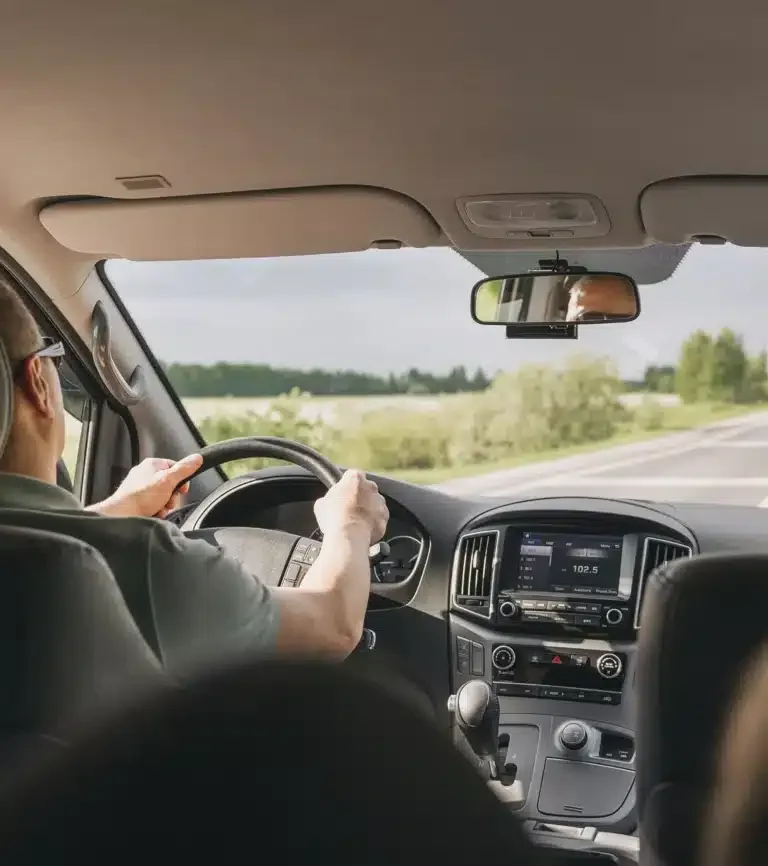
Basic Safety Tips for Driving While Hard of Hearing
While hearing loss doesn’t automatically prevent safe driving, it does require additional precautions. Here are some safety tips to minimize your accident risk as a hard-of-hearing driver:
Keep your vision sharp. Schedule regular eye exams and wear corrective lenses if needed. This allows your vision to better compensate for your hearing impairment.
Work with an audiologist. If your doctor recommends a hearing aid, consider wearing it while driving, even if you don’t use it in other settings. A properly fitted device can help you pick up important sounds such as sirens or horns. Schedule regular checkups with the audiologist to ensure your hearing aid continues to work at its best.
Limit distractions. Reduce background noise from phones, music, or passengers. A quiet environment makes it easier to detect subtle vibrations and visual cues.
Plan ahead. Review your route before leaving and confirm that you’re comfortable with the driving conditions.
The Science of Compensation: How Other Senses Adapt
The human brain is excellent at adapting to an impaired sense. When hearing ability is limited, the brain compensates by strengthening other senses. This is known as cross-modal plasticity.
In individuals who are deaf or hard of hearing, non-hearing senses may step in to provide the environmental awareness that sound would usually offer. Research supports this idea. In one study, deaf participants rated their remaining senses—such as sight, touch, and smell—as stronger than those of hearing individuals.
People with hearing loss have superior peripheral vision and faster visual reaction times. For example, deaf drivers may “hear” sirens by feeling the vibrations of the sound waves hitting the steering wheel. These heightened visual and spatial senses naturally support defensive driving habits.