

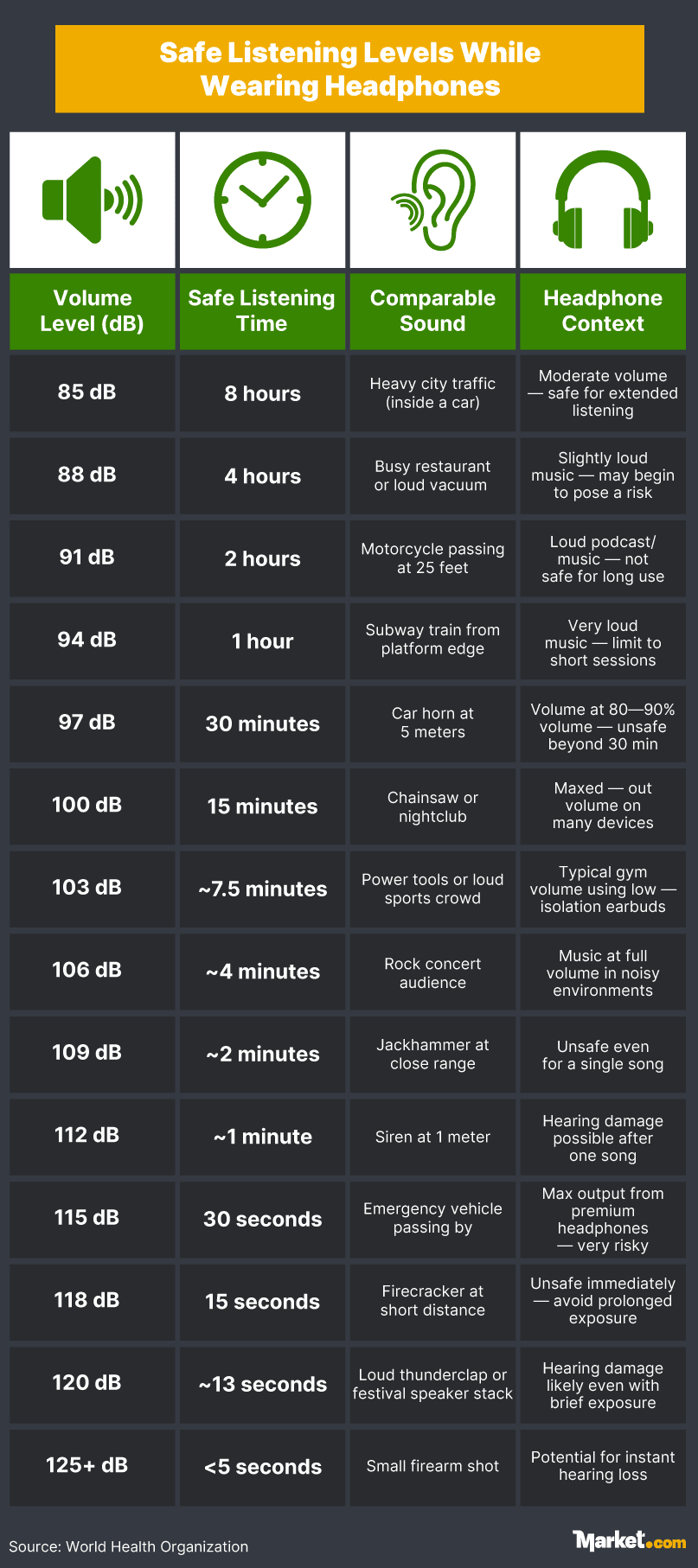
How Loud, for How Long
A common misconception among headphone users is that audio isn’t loud if it doesn’t feel loud. However, long-term listening to even mildly elevated audio is enough to cause irreversible hearing damage.
Safe listening levels depend on both volume and duration. According to the World Health Organization, 85 decibels (dB) is the maximum safe listening level for up to 8 hours. Every 10 dB increase cuts safe exposure time dramatically — at 95 dB (roughly the volume of a motorcycle), the safe limit drops to just over 10 minutes per day.
Most headphones and portable speakers can easily exceed 85 dB, and many reach volumes between 100–136 dB. Despite this, the relationship between volume and listening time isn’t widely understood, even though it’s critical for long-term hearing protection.
Noisy environments — such as gyms, busy urban areas, or construction — regularly exceed 80 dB, and long-term exposure poses a hearing risk. Headphone users often turn their volume up to drown out these ambient sounds, putting their hearing at increased risk. One study showed that even young populations, like adolescents, who use earbuds in this way have a 4.5-fold increased risk of hearing loss.
While few people work to protect their hearing, even small changes can have a lasting benefit. Switching to over-ear or noise-canceling headphones, implementing listening breaks, and reducing the volume significantly reduces the risk of irreversible hearing loss.
Source:https://www.market.com/headphones-speakers/headphones/guides/headphones-hearing-loss-safety-guide/